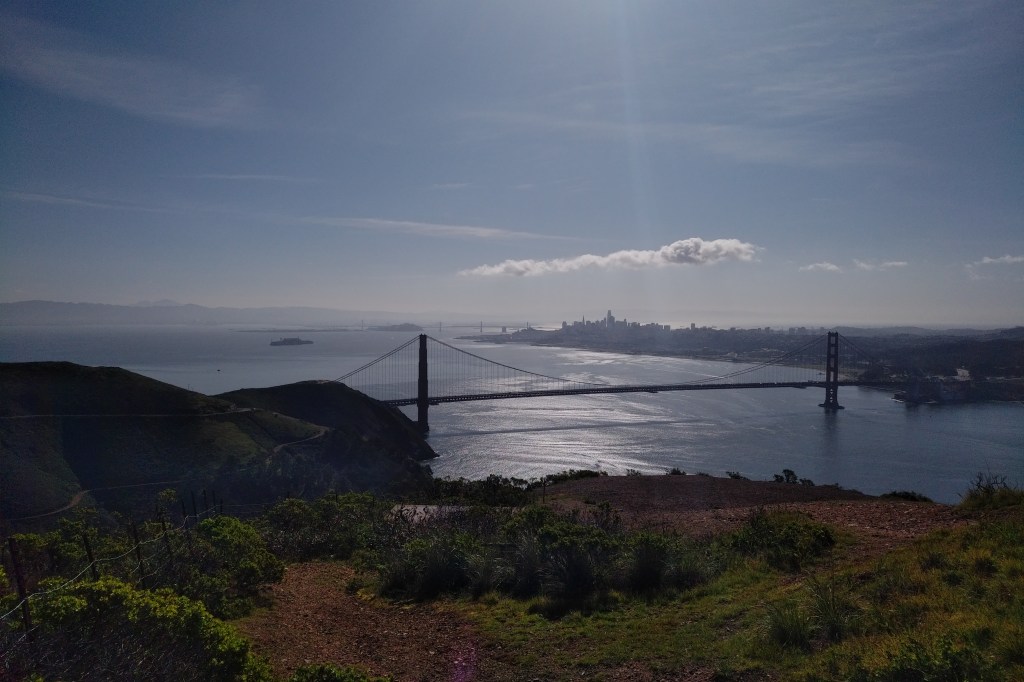
The Golden Gate National Recreation Area, K-0647, is a national park in the San Francisco Bay Area that covers a substantial area with plenty of potential POTA activation locations both north and south of the Golden Gate.
The activation today was made from the southern part of the Marin Headlands on Hawk Hill, a spot occupied by ruins of a gun emplacement, observation posts, and bunkers from WW2.

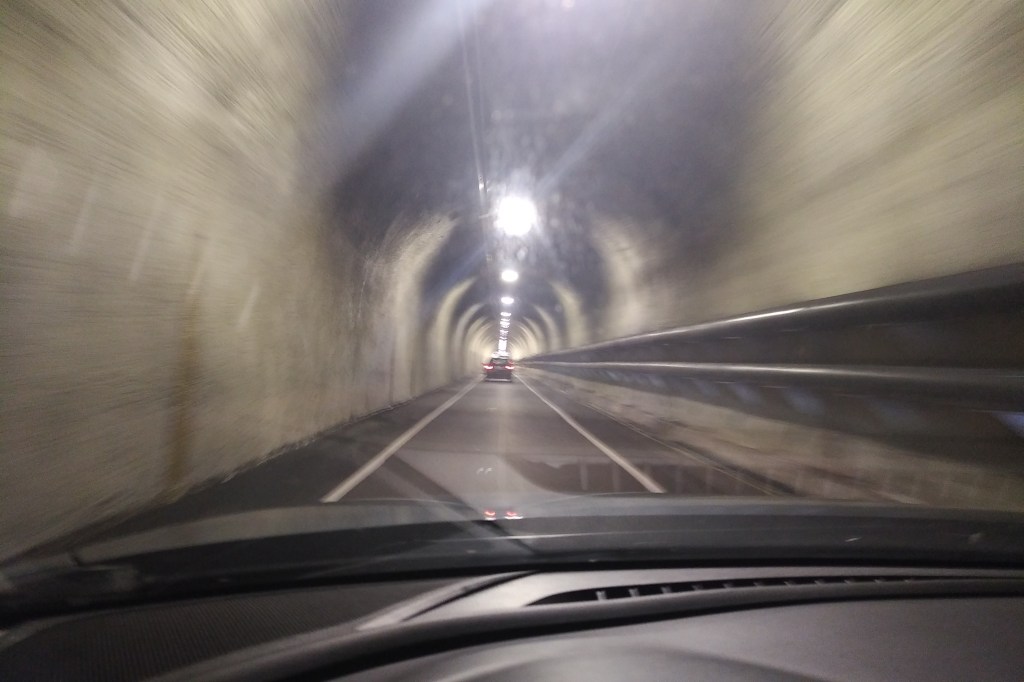
The headlands area is accessible by car via a long and drippy one lane tunnel drilled through the mountainside. A 5-minute red light manages traffic through this tunnel, one direction at a time.
The parking area along Conzelman Road is popular with visitors for the views of the Golden Gate Bridge and San Francisco. From here, an old partially paved road leads you up a steep but short climb to the top of the hill.
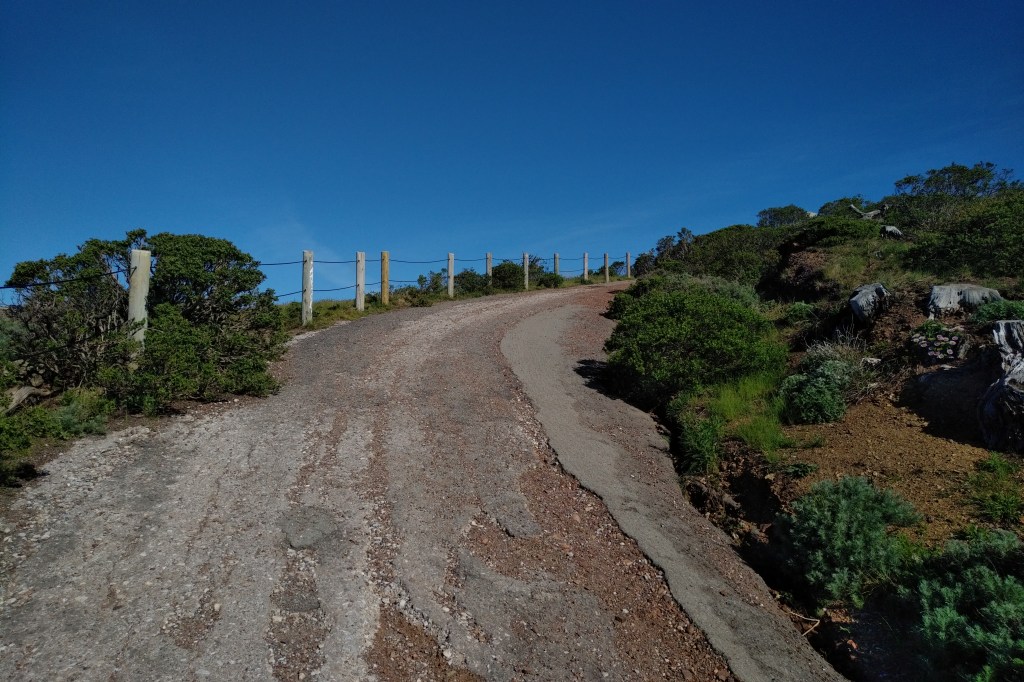
I got to the top of Hawk Hill just after 10AM, there weren’t many people around yet and just a bit of morning chill clung to the air.

I continued along the ridge to the high point of the hill, farthest from where most sightseers congregate.
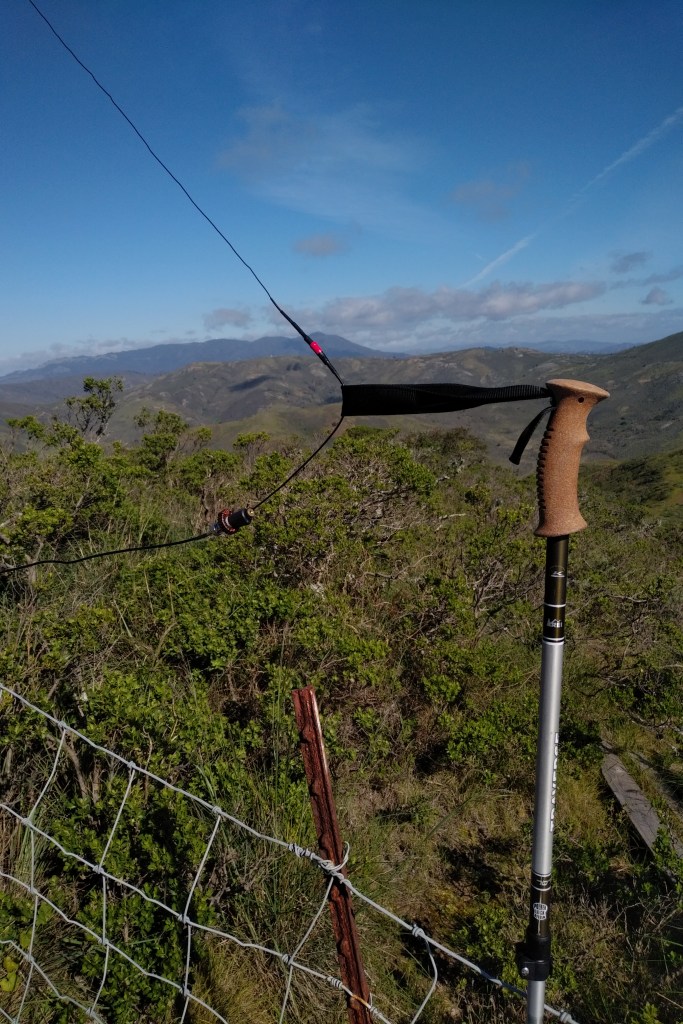
My setup was adjacent a low wire fence that keeps people from wandering into the scrubby vegetation on the hillside. The fence supported a 7 meter mast to which one end of a 20M EFHW was attached.

In some of my recent activations, the 64:1 transformer for the EFHW had been sitting directly on the ground. I believe the close proximity to the ground and contact with vegetation is probably causing power loss, which I can ill afford when running QRP. So, this time I looked for an opportunity to mount the low end of the antenna with the transformer a few feet off the ground.
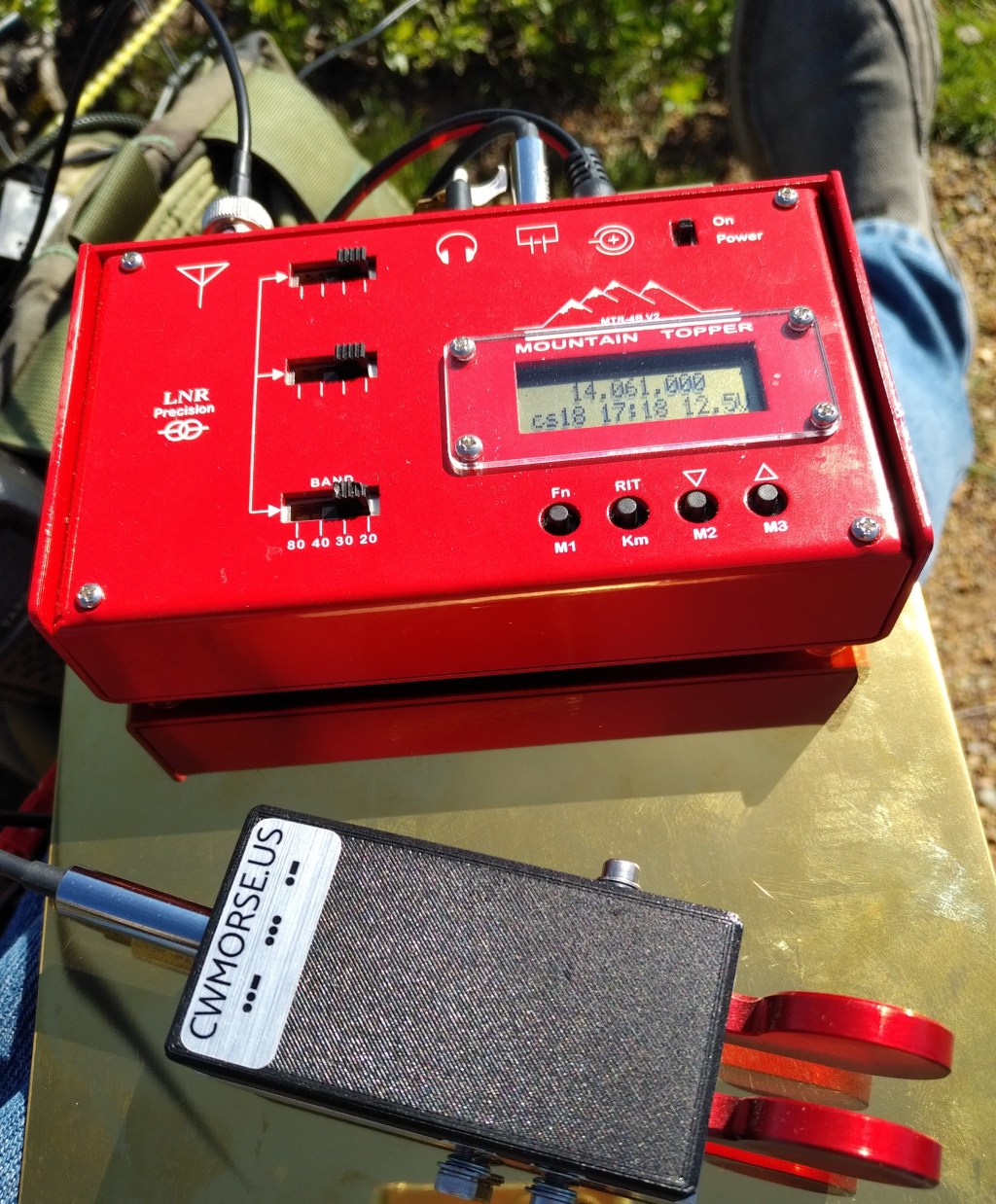
I planned to let the RBN spot me since I had scheduled this activation ahead of time so I tapped out a “QRL?” to see if the the frequency was occupied and a moment later put out a “CQ POTA W6CSN” call on 14.061 MHz. Right away K6NIA surprised me by coming back to my very first call! That’s a first for me.

Later, while calling CQ, I did notice that the RBN had picked up my call and the scheduled activation was successfully logged to the POTA spots page.
My goal today was to get my 10 by calling, then try to pick up some park-to-park contacts by switching to “hunter” mode. The 20M band wasn’t really on fire and the calls weren’t exactly pouring in, but I was making steady progress with contacts every 3 to 5 minutes. By 11AM I’d collected the needed 10 QSOs in activator mode, so I marked myself QRT on the pota.app spots page and put in a note that I was “going hunting.”

Tuning around a bit I heard a CW station operating what sounded like an activation with just short exchanges of RST, but I couldn’t find the call, N4LAG, on the POTA spots page. More listening revealed that this was a SOTA operator on Fawn Peak W7A/MN-109. I stood by while G4OBK with a distinctive “polar flutter” sound on their signal tried to work them, but unfortunately the SOTA operator in Arizona just couldn’t hear the DX well enough to complete the QSO. A few calls later, I got in with my 5 watts for a park-to-summit QSO.

I rounded out the morning with a couple of park-to-park QSOs with WI0S and KT7RC at Lost Dutchman State Park and Catalina State Park respectively, both in Arizona.
The station packed up quickly and I was soon back in The City ordering lunch from my favorite local deli.
 w6csn’s outdoor amateur radio
Leave a comment