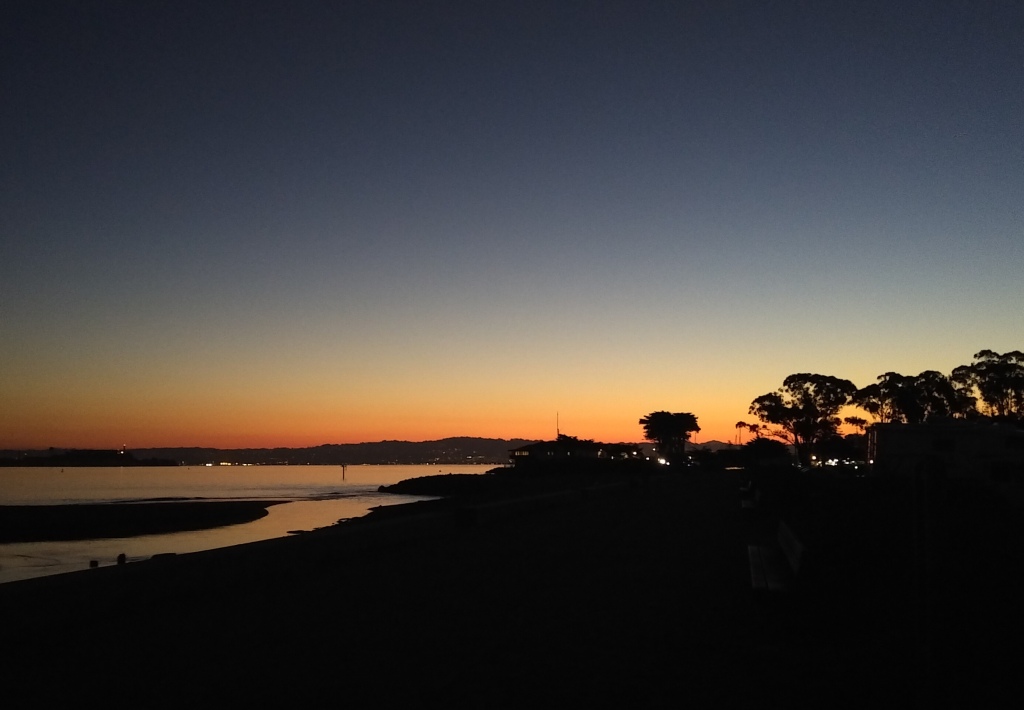
This is the weekend in October that features the U.S. Navy’s Blue Angels taking to the skies over the Bay Area. The air show takes place over the Bay waters, which means the beaches and shorelines around San Francisco will be packed with people and traffic. Since my usual POTA operating location is right by East Beach, I had pretty much given up on the idea of activating K-7889 this weekend.
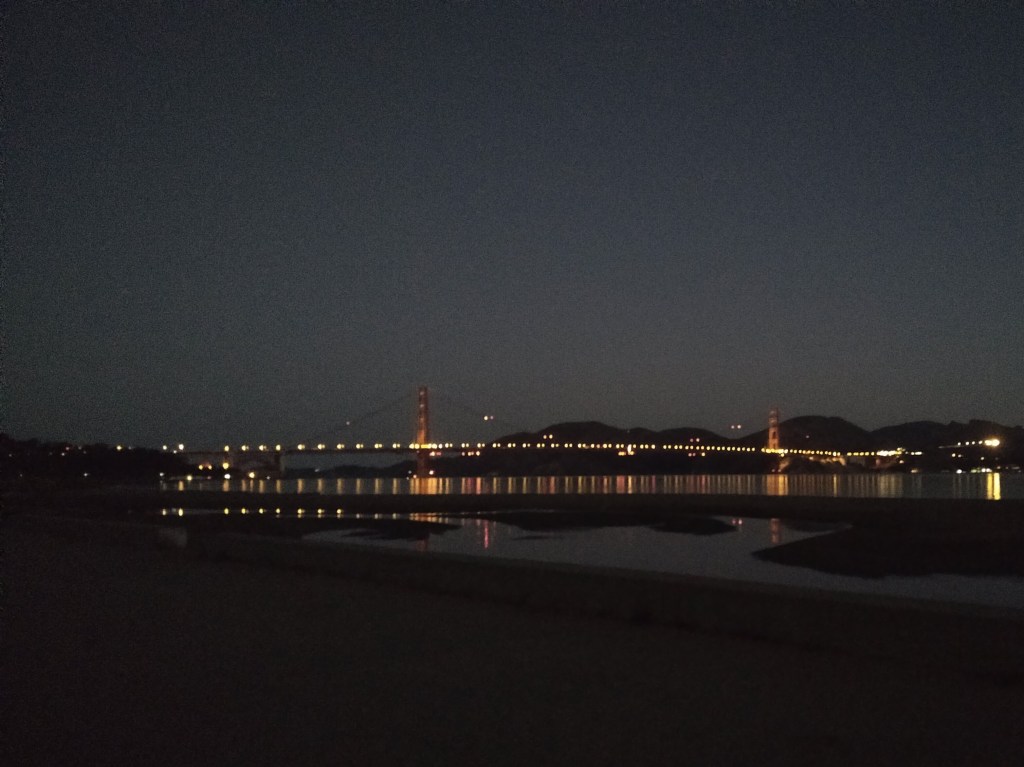
The airshow is on Saturday and Sunday, but the Blue Angles practice on Thursday and Friday, weather permitting. So here I was on Friday morning, awake at 5AM watching K4SWL on YouTube doing POTA when the idea of getting out for an early activation got into my head.
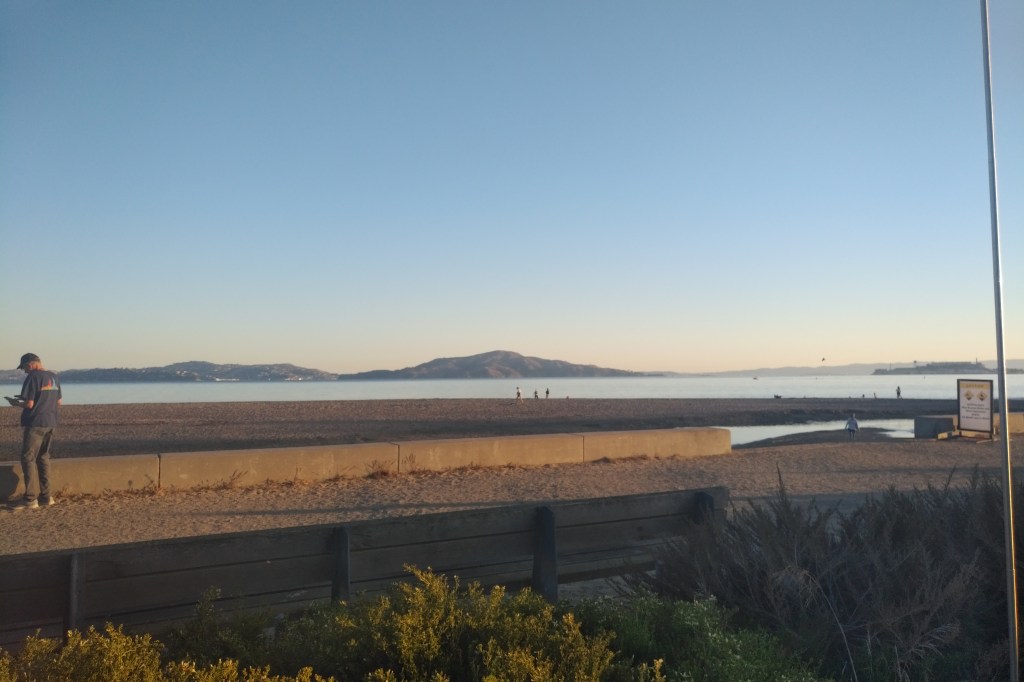
It was still dark when I tossed my backpack, which was already loaded for POTA from the previous activation, into the car and headed down to the East Beach in the Presidio of San Francisco National Historic Site (K-7889).
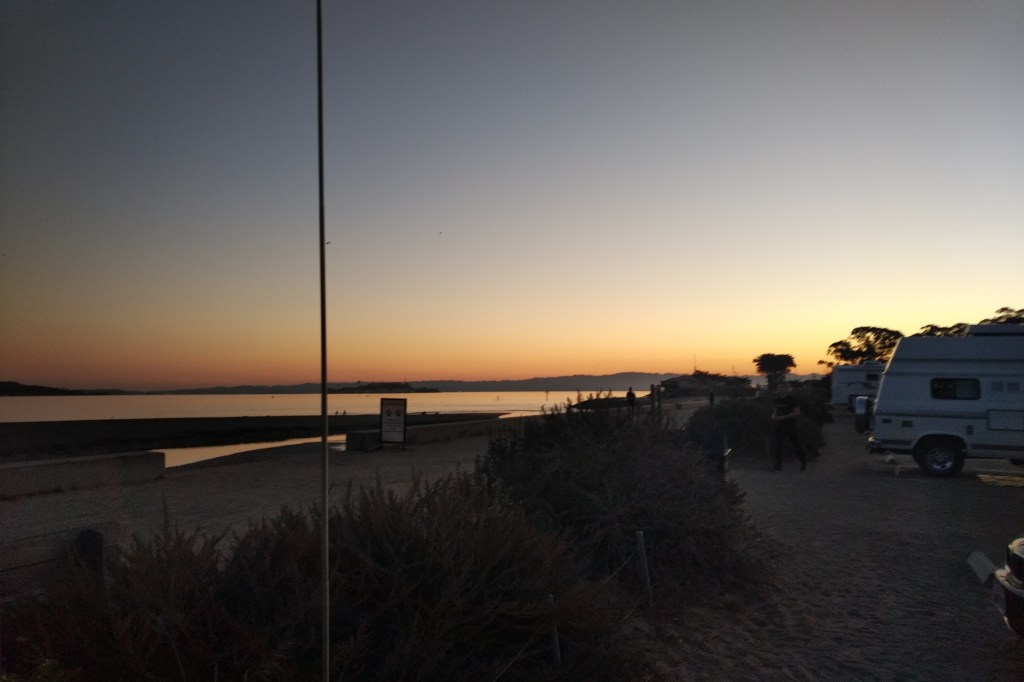
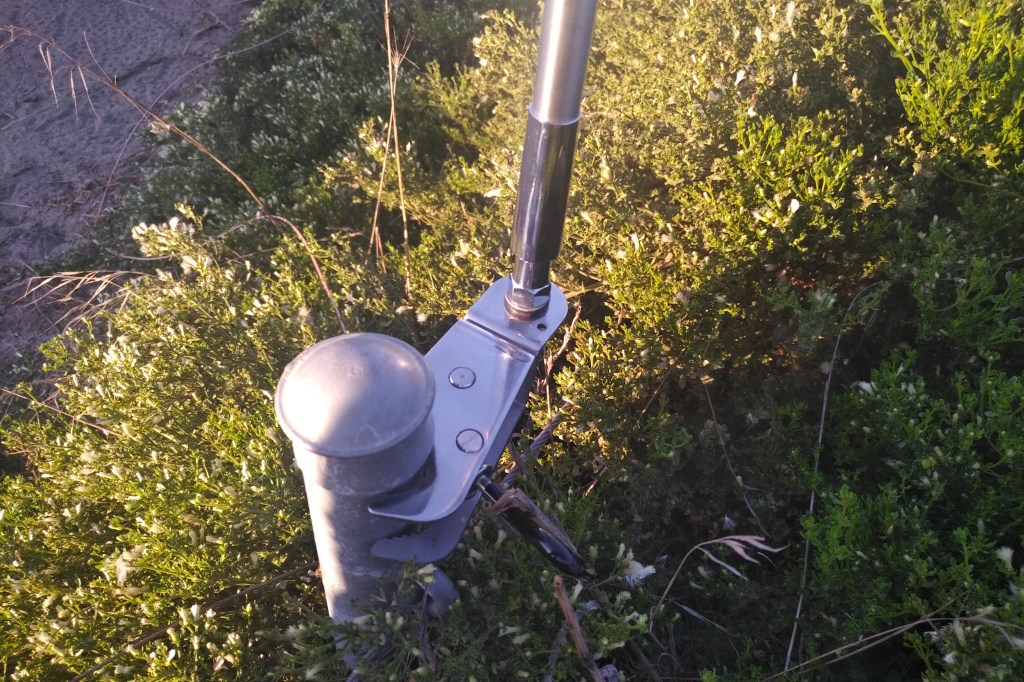
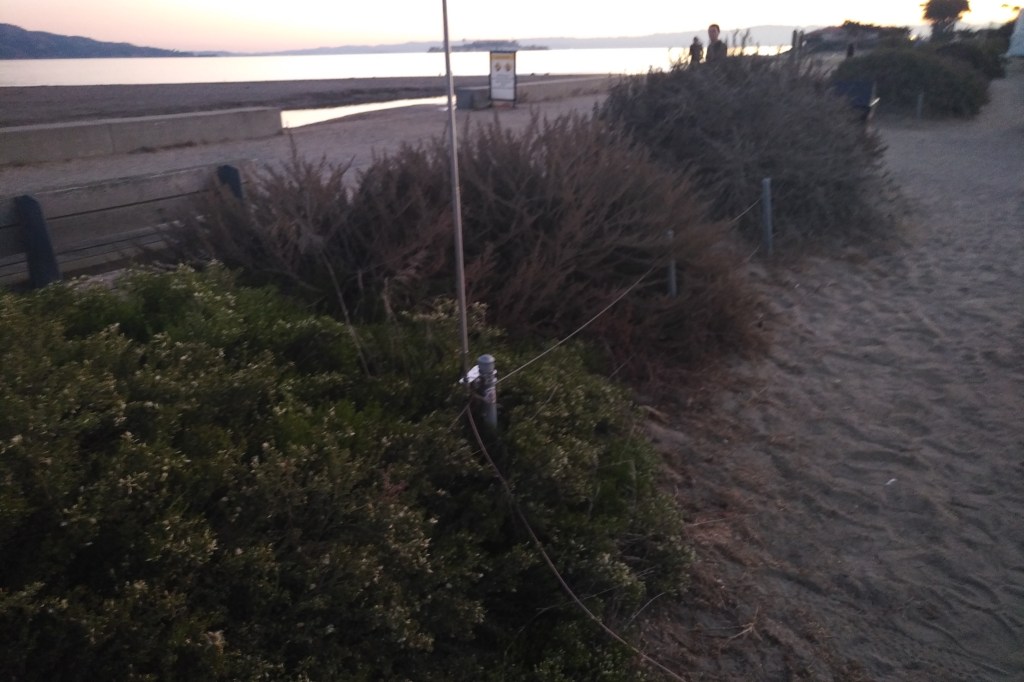
Given the early hour and low light conditions I didn’t relish the idea of doing my usual picnic table and tripod antenna setup. Not long ago I had acquired one of those “mirror” antenna mounts with the jaw clamp arrangement, and this was a great opportunity to try it out. Between the parking lot and the beachfront promenade there is low fence constructed of short steel posts and strands of stainless cable. The fence post was a perfect place to attach the clamp and the MFJ-1979 17 foot telescopic whip, which is a quarter wave on 14 MHz.
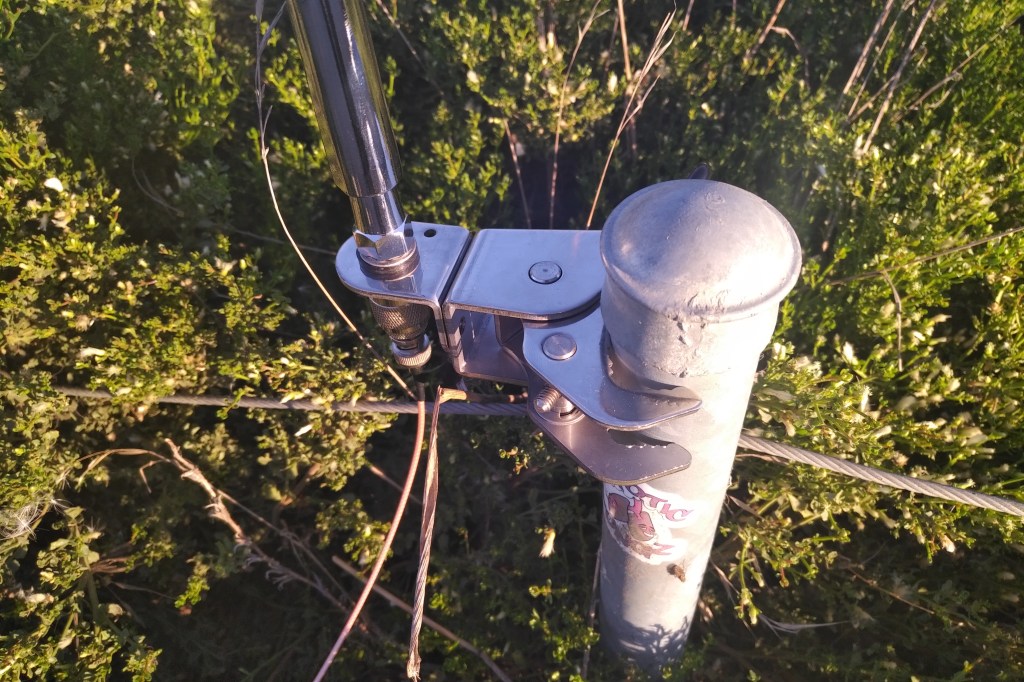
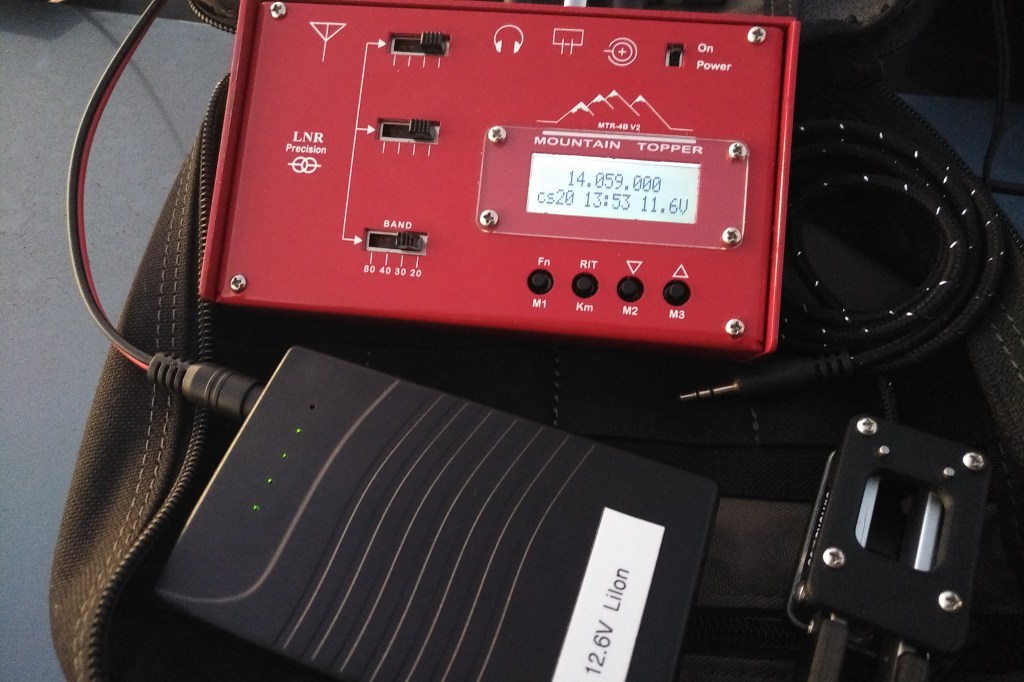
I was ready to string some radials out to give the antenna a ground plane to work against, but wondered if the post, being sunk into the ground by the Bay and the steel fencing cables might provide enough of a counterpoise. A quick check of the SWR on the meter built into the MTR-4B showed a 1.2 to 1 – no need to even bother with radials with an SWR like that right out of the box.
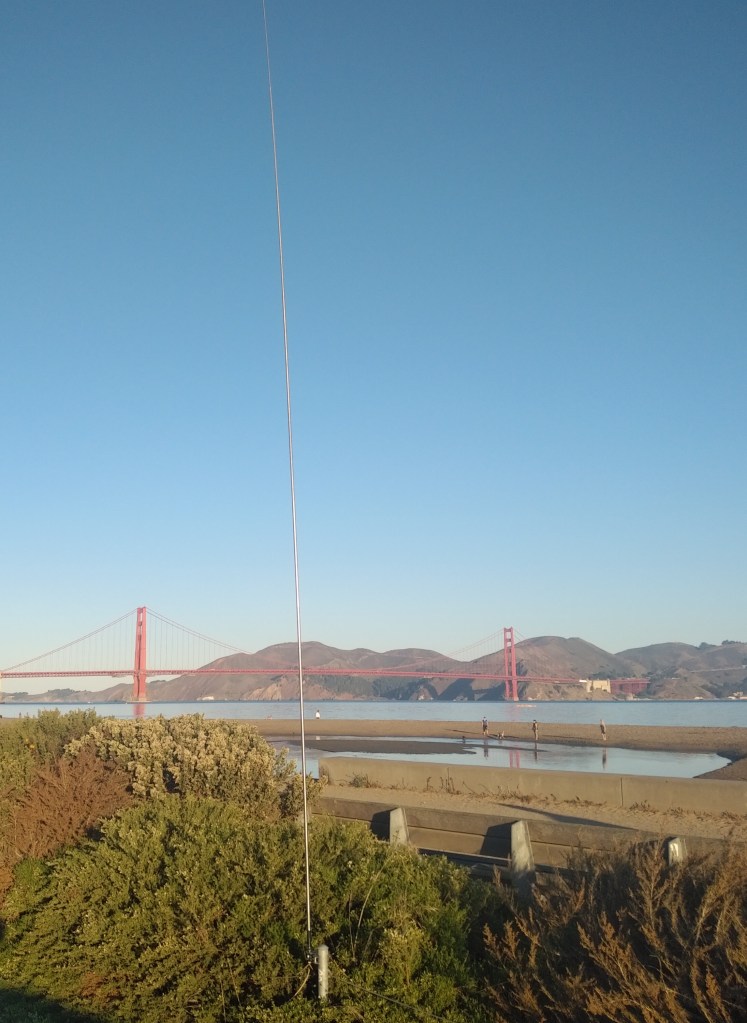
The other advantage of this antenna setup was that it is right next to the car. However, I don’t really like operating from my vehicle as it’s not very sporting nor is it comfortable. Instead, I simply set the station on the trunk lid and completed the activation from a standing position. The other advantage of this arrangement was that I could closely guard the RG-316 coax going from the radio to the antenna to keep any humans or canines from getting entangled.

A benefit of using the trunk was that magnetic CW Morse paddles stuck firmly to the operating “table.” This made sending CW from a standing position a breeze.
I’m not accustomed to working the “Early Shift” so didn’t know what to expect propagation-wise. The band noise was low and quiet, except for occasional QRM from nearby RVs.
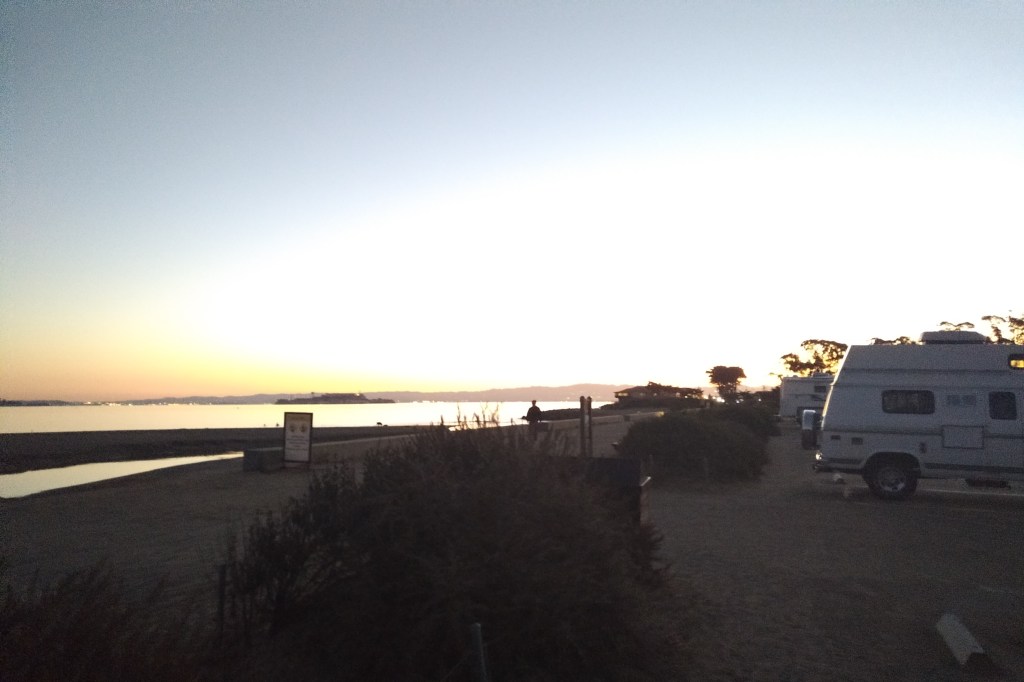
Propagation seemed to favor stations to the east of the continental divide, with virtually no western signals appearing. I suppose it’s possible that western stations were simply not up and at their keys this early in the morning.

I took a break from calling CQ to hunt WI0S Park-To-Park in Minnesota and when I returned to “my” frequency of 14.059 MHz I heard an SP9 station calling. I had been away for only a moment, was it possible he was calling me? The signal had that distinctive, fluttery “underwater”sound that DX has when coming over the polar regions. I didn’t hear any other signal in there so I proceeded to work SP9RXP. The brief QSO went into the log with me still not 100% certain that he had worked me and not somebody else that I couldn’t hear.
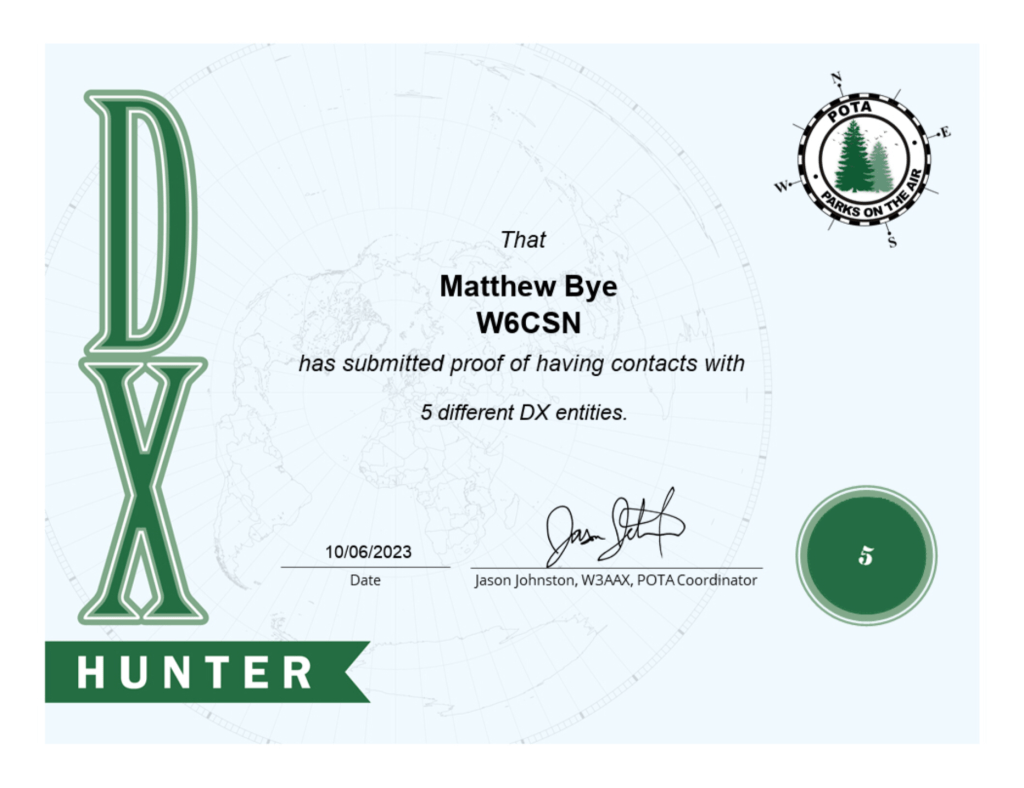
Later, at home, I checked the POTA hunter “log” page as I am wont to do and found I had, in fact, worked SP9RXP activating from SP-0724 Południowomałopolski Protected Landscape Area in Poland! Now that was some DX! Additionally, this QSO unlocked POTA’s “DX Hunter” certificate for working activators in five separate DX entities. From the West Coast, Alaska and Hawaii feel a little bit like cheating, but hey DX is DX and I’ll take it!
With the sun up and Friday morning in full swing by the Bay, I decided to wrap up the Early Shift. I’d just stowed the station inside the trunk of the car but hadn’t yet taken down the antenna when I got a Ham Alert that K4SWL was on the air on 20 meters. I’ve always wanted to work Thomas since he has been such a big inspiration to me to get back into HF and CW, but usually his activations just don’t happen when I am free to operate.
With some optimism, because I’d logged a South Carolina station during my own activation, I quickly reassembled the station and tuned to the frequency K4SWL was on. Ahhh, I could barely hear him! But, I could quite easily hear the pileup he was generating.

Suspecting it would be quite a while before I could break through the dozens of stations with my little 4 watts from the West Coast, I decided to save that challenge for another day. I know it’s possible to reach coast-to-coast with QRP, it will just take the right combination of factors to get that YouTube sensation in the log!

Nevertheless, it was a satisfying activation with a new antenna setup, 14 CW QSOs, and some proper DX. I suspect I will try to do more Early Shift ops at the crack of dawn from K-7889 in future months.
Equipment List
- LNR Precision MTR-4B 4 band QRP CW transceiver
- Talentcell 12V LiIon battery pack
- CW Morse Machined Aluminum Double Pocket paddles
- MFJ-1979 17 foot telescoping whip antenna
- Adjustable mirror mount antenna bracket
- 3/8 x 24 to SO-293 coax adapter/isolator
- PL-259 to BNC adapters
- RG-316 BNC coaxial cable
- C. Crane Radio earbuds
73 es gud DX de W6CSN


 w6csn’s outdoor amateur radio
Leave a reply to dolphus Cancel reply