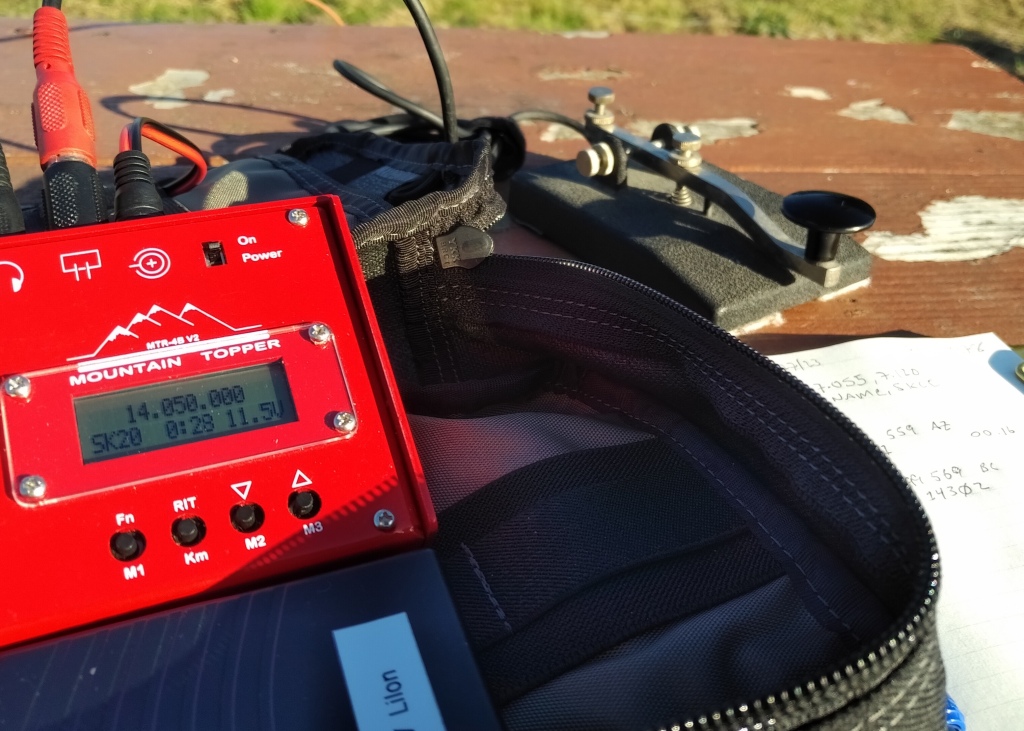
In this modern era of radio technology, where even analog radio is largely digital, we amateurs are accustomed to perfect signal quality all the time.
Nevermind the perfunctory 599s that are handed out during contests, for activities like Parks On The Air and Summits On The Air I believe most of us like to send and receive an honest RST report.
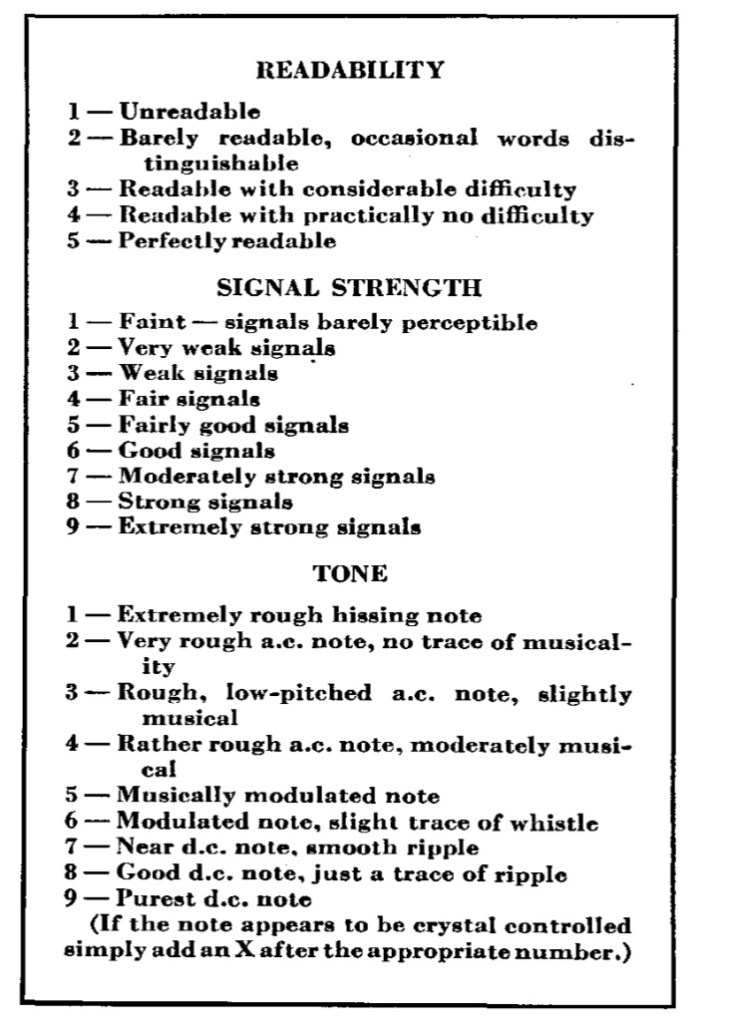
Although subjective, readability (R) and signal strength (S) are pretty well understood quantities. But what about tone, the T in R-S-T ? When was the last time you sent or received a tone value other than “9” (the highest value) ?
Last evening, at the end of one of my frequent activations of the Presidio of San Francisco (K-7889), I struggled to pull a barely readable and very weak signal out of the noise. For what it’s worth, the natural noise floor was very low, with the geomagnetic field listed as “Inactive” on qrz.com.

What made the signal particularly difficult was that it sounded quite distorted. The problem I faced was how to tell the OM that it sounded like his signal had been through a blender. The numbers in the Tone scale go from 1 to 9 but I did not have any understanding of the specific defects encoded by the scale. I needed to send a report, and quick, so I dashed out a “225” followed by “DISTORTED.” But I was unhappy that I needed to send an extra, unexpected word to explain the reason for the “5” tone.
Tone
http://arrl.org/quick-reference-operating-aids
1–Sixty cycle a.c or less, very rough and broad.
2–Very rough a.c., very harsh and broad.
3–Rough a.c. tone, rectified but not filtered.
4–Rough note, some trace of filtering.
5–Filtered rectified a.c. but strongly ripple-modulated.
6–Filtered tone, definite trace of ripple modulation.
7–Near pure tone, trace of ripple modulation.
8–Near perfect tone, slight trace of modulation.
9–Perfect tone, no trace of ripple or modulation of any kind.
When I got home I resolved to refresh my knowledge on the R-S-T system so that I could have it at my disposal while operating and on the rare occasion when a tone value other than 9 is warranted.
May your signals always be strong and pure.
73 de W6CSN


 w6csn’s outdoor amateur radio
Leave a reply to dolphus Cancel reply