This is the first in a short series of brief field reports on POTA activations while on a weeklong roadtrip through several states in the western U.S.

The trip would follow Interstate 80 from San Francisco, over the Sierras, through Nevada, Utah, and Wyoming to Fort Collins Colorado. And back, mostly retracing the same route.
The first occasion of outdoor amateur radio activity came on day three, a layover day spent in Logan, Utah about an hour north of Salt Lake City.

It was early and the family was sleeping in, enjoying a break from driving. Not far from our hotel was the Bud Phelps Wildlife Management Area, POTA reference US-11044. This location looked promising so I looked up the WMA on my phone’s navigation app and quietly slipped out.
Now, I am not sure if my phone didn’t know exactly where we were going or if Utah’s WMAs lack signage or other identifying infrastructure, but after driving the proscribed route, I found myself at the end of a dirt road surrounded by cows and sheep. There was no visible indication that this was, in fact, Bud Phelps WMA but my phone announced “You have arrived,” so who was I to argue?

I fired up the FT-818 using an MFJ-1979 stainless steel telescoping whip antenna on a mag-mount base on the car’s roof. In this configuration the antenna presents a slightly higher SWR, but nothing the 818 can’t handle so I didn’t bother trying to improve the match.

I made a couple of contacts on 17 meters before extending the antenna fully and completing the activation on the 20 meter band.

Later the same day, after picnicking in and checking out natural beauty of Logan Canyon, I took advantage of some free time to make the short drive up into Idaho. If I could find a place to activate the Pioneer National Historic Byway (US-10420) then I could bag another state, even though Idaho wasn’t part of our planned travel route.

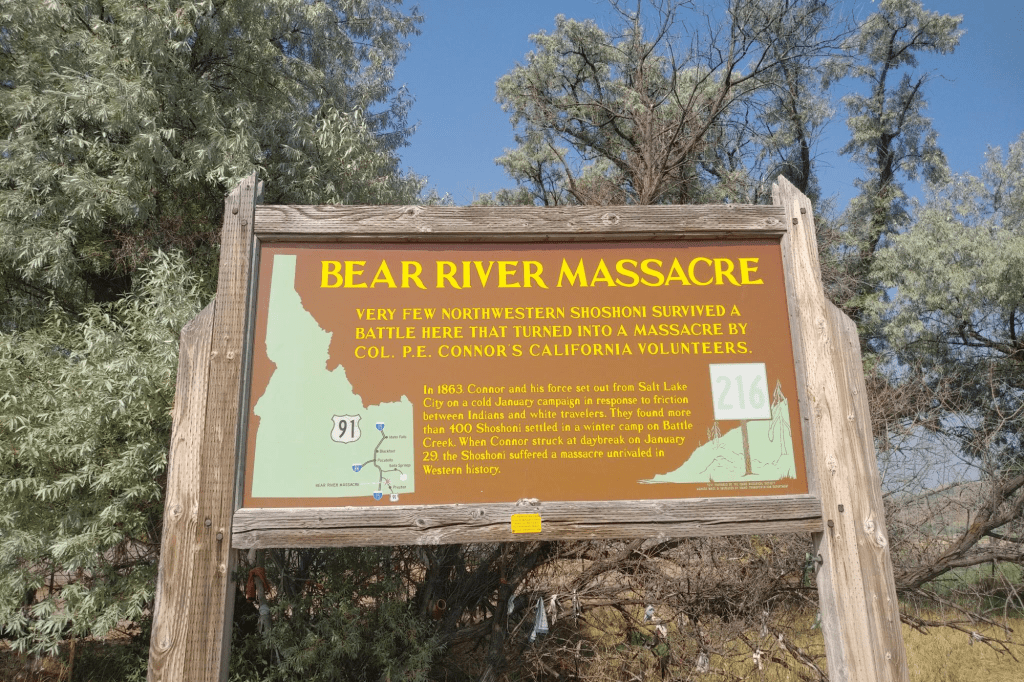
Driving the Scenic Byway, the first obvious stop we came to was the site commemorating the “Bear River Massacre” – not exactly the POTA vibe I was hoping for, but it was over 90°F outside and I wanted to try to complete the activation before 00 UTC rolled around.

I deployed the Gabil GRA-7350T vertical, again on the rooftop magmount and plugged in the Elecraft KH1. The black enclosure of the Yaesu FT-818 would absolutely burn up sitting on the dash in the direct sun.

It was hot enough that I kept the car running to provide air conditioning so that us pale San Franciscans wouldn’t expire in the Idaho summer heat.

Thankfully, the QSOs poured in pretty easily and the activation was complete in less than 20 minutes, a rare occurrence with the unstable solar conditions we’ve seen recently.

Two new “parks” and two new states in the activators log made for a successful first day of outdoor amateur radio on this road trip. Next stop on the POTA tour is Colorado.
73 de W6CSN

 w6csn’s outdoor amateur radio
Leave a reply to grimrpr11 Cancel reply